Rail Europe · 2025 — now
Modernising a ten-year-old booking platform, one layer at a time
Instead of a rewrite, a revamp — a legacy Rails monolith moved toward modern Rails and Hotwire, the mobile apps brought onto the same codebase, and booking pages made to feel faster.
Senior Software Engineer
- front-end bundle size
- −40%
- average, critical booking pages
- −1.3 s
Context
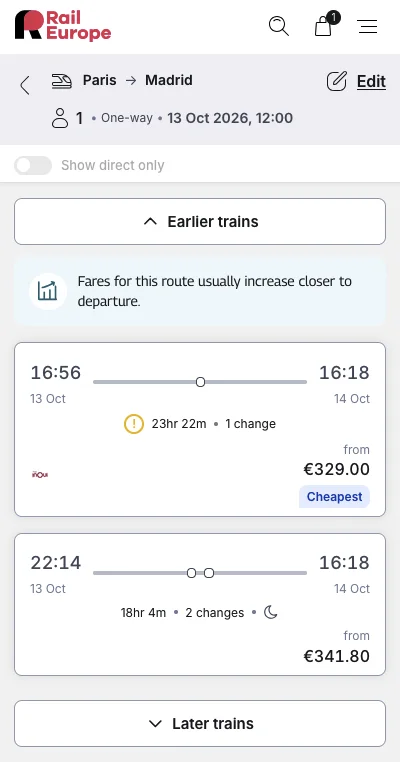
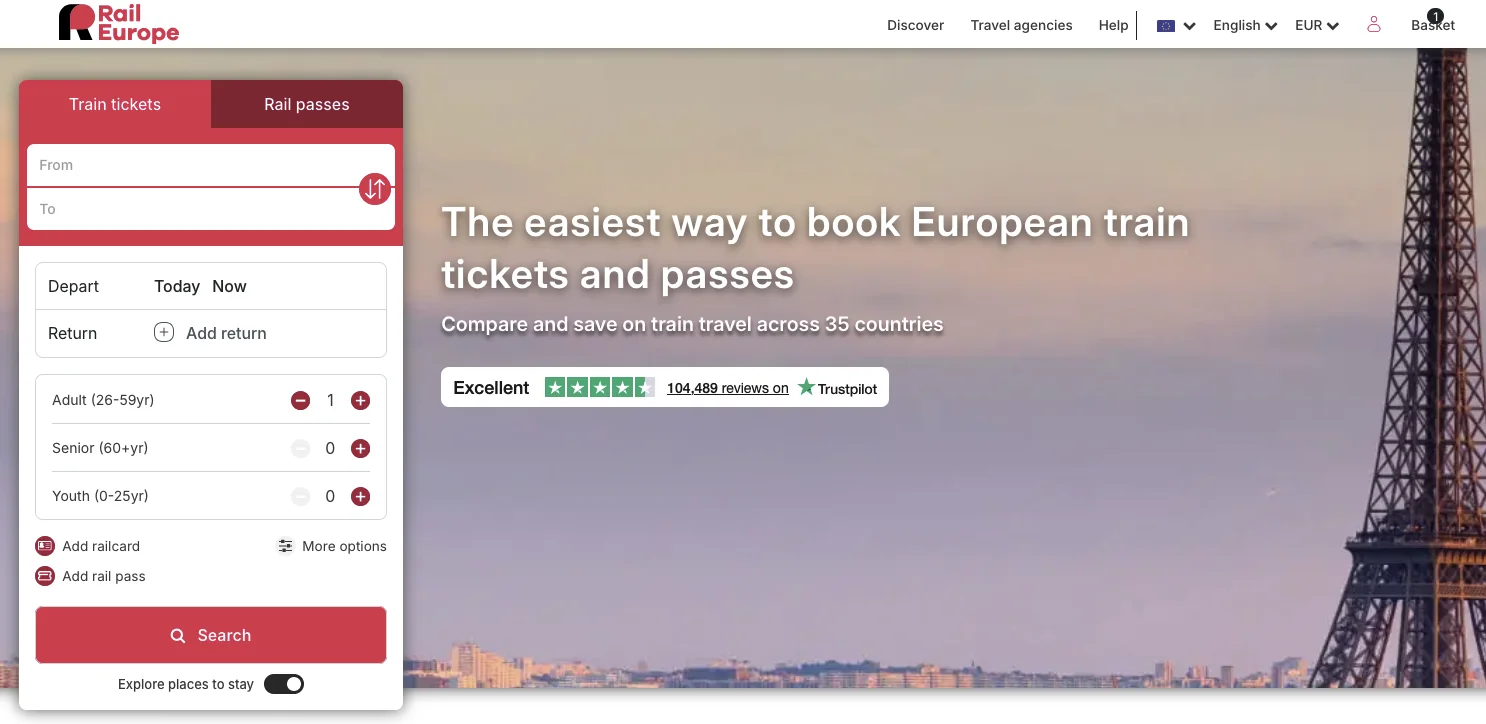
Rail Europe sells train tickets across Europe. Its customer-facing site was a Rails monolith more than ten years old, with layers of frontend history: CoffeeScript, jQuery, Sass, AJAX-driven partials, and a separate React SPA plus an API that mainly served the mobile apps.
After the from-scratch SvelteKit rebuild was stopped, the plan became revamping this platform in place, toward a modern Rails and Hotwire stack. I joined that effort as a senior engineer, and took over the mobile apps.
What I did
- Brought the mobile apps onto the main codebase with Capacitor. The apps now render the Rails site in a webview, with native capabilities where they matter — one codebase for the web and the apps.
- Removed the React SPA and its API once the apps no longer needed them, with a graceful path for older app versions.
- Moved legacy scripts to plain JavaScript and Stimulus, and interactive pieces like fare cards to Turbo.
- Designed a perceived-performance strategy for the booking funnel: live polling, optimistic rendering and progressive enhancement, so pages respond before the network does.
- Brought linting back into the pipeline, Stimulus controllers included, so the new conventions are checked rather than remembered.
Outcome
The front-end bundle shrank by 40%, and the critical pages of the ticket-booking funnel got 1.3 seconds faster on average.